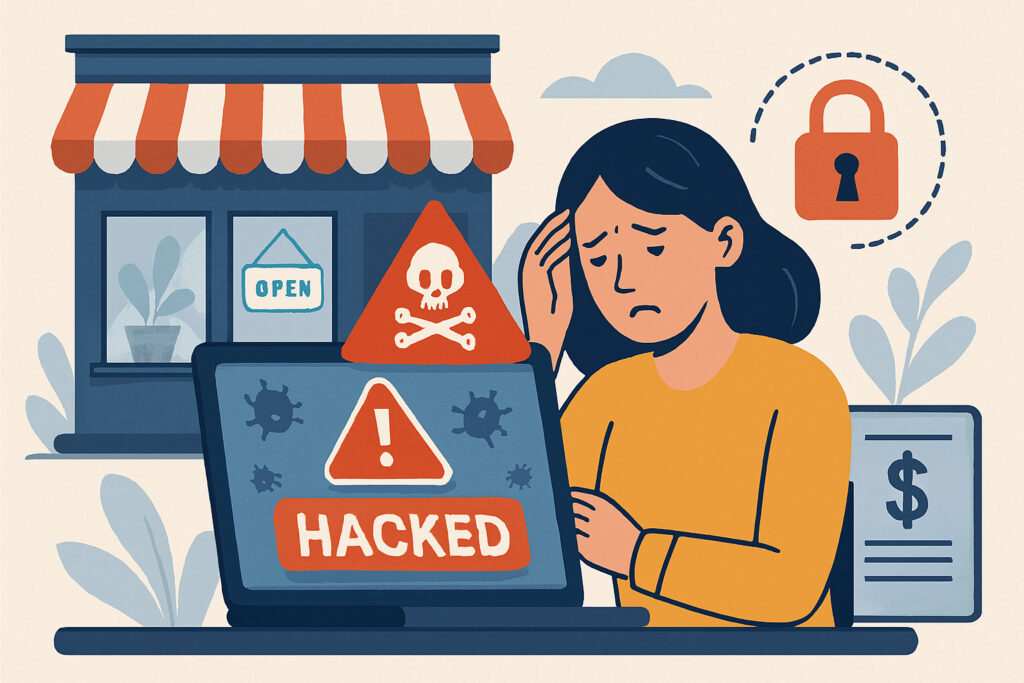
When I first started working with small business websites, I thought security was something only big corporations needed to worry about. Then I watched a local bakery lose three months of online orders because their WordPress site got compromised. The hackers didn’t steal millions – they just quietly redirected customers to a competitor’s site. By the time the owner noticed, the damage was done. That’s when I realized the true cost of a hacked website goes far beyond the initial cleanup bill.
The Immediate Financial Hit
Let’s talk numbers first. The average cost to clean up a hacked small business website ranges from $500 to $3,000, depending on the severity. But that’s just the starting point. You’ll likely need to hire a security professional or pay your web developer overtime rates to work on an emergency basis. Most small businesses don’t have this money sitting around in a contingency fund.
Then there’s the ransom situation. Some hackers lock you out completely and demand payment to restore access. Even if you pay – and experts strongly advise against it – there’s no guarantee you’ll get your site back. I’ve seen business owners pay $1,500 in Bitcoin only to remain locked out.
Don’t forget the technical costs either. You might need to replace your entire hosting environment, purchase new SSL certificates, and invest in proper security tools. These expenses add up quickly, and they come at the worst possible time when your revenue stream has been disrupted.
Lost Revenue While You’re Offline
Here’s what really hurts: every hour your website is down, you’re losing money. If your site generates $100 per day in sales, a week-long outage costs you $700 in direct lost revenue. For many small businesses, their website is their primary sales channel. When it’s compromised, customers can’t place orders, book appointments, or even find your contact information.
A restaurant I worked with last year got hacked during their busiest season. Their reservation system was embedded in the website, and when it went down, they lost two weeks of advance bookings. The financial impact wasn’t just the lost reservations – it was the disappointed customers who went elsewhere and never came back.
The Customer Trust Problem
This is where the real cost becomes difficult to quantify. When customers visit your site and see warning messages about malware or suspicious activity, they lose faith in your business. Google’s ”This site may be hacked” warning is particularly devastating. Studies show that 95% of users won’t proceed past that warning page.
Even after you’ve cleaned everything up, the trust damage lingers. Customers wonder if their credit card information was compromised. They question whether you’re professional enough to handle their business. Some will simply never return, and you’ll never know how many potential customers avoided you based on your security reputation.
SEO Penalties and Long-Term Visibility
Google doesn’t just warn visitors about hacked sites – it actively penalizes them in search rankings. When your site gets blacklisted, you can drop from the first page to complete obscurity overnight. I’ve seen businesses lose years of SEO work in a matter of days.
The recovery process is painfully slow. Even after cleaning your site and submitting reconsideration requests to Google, it can take weeks or months to regain your previous rankings. During this time, your competitors are capturing all the organic traffic you worked so hard to build. Some businesses never fully recover their search visibility.
Legal and Compliance Issues
If customer data gets stolen during a breach, you’re facing potential legal liability. Depending on your location and industry, you might be required to notify affected customers and provide credit monitoring services. Data protection regulations like GDPR can impose fines of up to 4% of annual revenue for security failures.
Even if you avoid fines, the legal consultation fees alone can reach thousands of dollars. You’ll need advice on disclosure requirements, liability issues, and proper notification procedures. This is especially critical if you handle payment information or personal customer data.
The Hidden Costs Nobody Mentions
There are numerous indirect costs that most small business owners don’t anticipate. Your email reputation might be damaged if hackers use your server to send spam. Your domain could end up on blacklists that take months to clear. You might need to change all your passwords, update two-factor authentication, and retrain staff on security protocols.
The time investment is enormous. As a small business owner, you’ll spend hours dealing with the crisis instead of running your business. This opportunity cost is often more expensive than the direct financial losses.
Prevention is Cheaper Than Recovery
Here’s the thing – implementing proper security measures before a hack costs a fraction of cleaning up afterward. Daily security scanning, regular backups, vulnerability monitoring, and proper configuration checks can prevent most attacks. The investment in preventive security tools typically runs $20-100 per month, which is minimal compared to the thousands you’ll spend on recovery.
Regular security audits help you catch problems before they become disasters. Automated monitoring can alert you to suspicious activity within minutes rather than weeks. These proactive measures not only save money but also protect your reputation and customer relationships.
Common Questions About Website Security Costs
How long does recovery typically take? For a basic hack, expect 3-7 days minimum. Complex infections can take weeks to fully resolve.
Will my insurance cover it? Most standard business insurance doesn’t cover cyber incidents. You need specific cyber liability insurance, which many small businesses don’t have.
Can I just rebuild the site from scratch? You could, but you’ll lose your SEO history, backlinks, and domain authority. It’s usually better to clean and restore.
The real cost of a hacked website isn’t just measured in dollars – it’s measured in lost opportunities, damaged relationships, and sleepless nights. Investing in proper security isn’t an expense; it’s insurance for your business’s future.