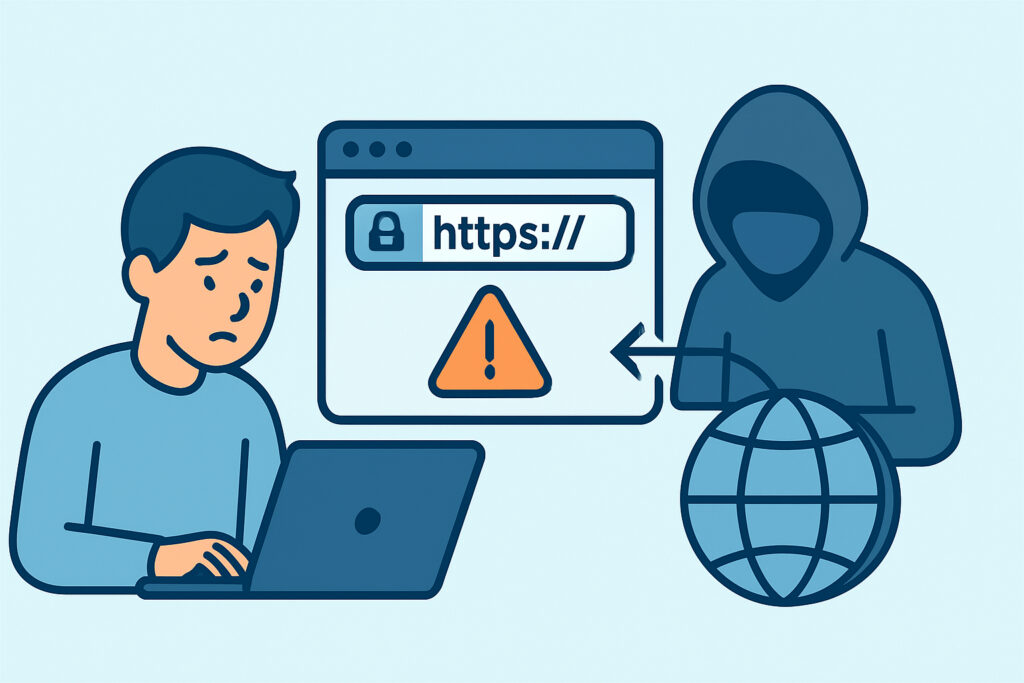
Server-Side Request Forgery (SSRF) attacks represent one of the most underestimated threats in web application security, allowing attackers to manipulate server requests and access internal systems that should remain hidden. These attacks exploit vulnerabilities where web applications fetch remote resources without properly validating user-supplied URLs, potentially exposing sensitive internal services, cloud metadata, and backend systems.
SSRF vulnerabilities occur when applications accept user-controlled input to make HTTP requests on behalf of the server. Unlike client-side attacks that target users directly, SSRF attacks leverage the server’s privileged network position to reach resources that external attackers cannot normally access.
How SSRF Attacks Work
The fundamental principle behind SSRF attacks involves tricking a web application into making unintended requests. When an application fetches external content – such as loading images from URLs, validating webhooks, or processing API callbacks – it creates potential entry points for SSRF exploitation.
Consider a common scenario: an image resizing service that accepts URLs to process remote images. A typical legitimate request might look like `https://example.com/resize?url=https://cdn.example.com/image.jpg`. An attacker could manipulate this parameter to target internal services: `https://example.com/resize?url=http://localhost:8080/admin`.
The server, acting on behalf of the attacker’s request, attempts to fetch content from its own internal admin interface. Since the request originates from the server itself, it bypasses network firewalls and authentication mechanisms designed to block external access.
Modern applications often run in cloud environments where SSRF attacks become particularly dangerous. Cloud providers expose metadata services at predictable addresses like `http://169.254.169.254/latest/meta-data/` on AWS. Attackers can retrieve sensitive information including IAM credentials, security group configurations, and instance metadata through SSRF vulnerabilities.
Common SSRF Attack Vectors
SSRF vulnerabilities manifest in numerous application features. File upload functionalities that accept URLs instead of direct file uploads create obvious attack surfaces. When users can specify remote file locations, attackers can substitute internal network addresses.
Webhook validation presents another frequent vector. Applications often verify webhook endpoints by sending test requests to user-provided URLs. Without proper validation, these verification mechanisms become SSRF exploitation points.
PDF generation services commonly accept HTML content with external resource references. Attackers can embed malicious URLs in HTML that the server processes, causing it to fetch internal resources during PDF rendering.
API integrations frequently require applications to make requests to external services based on user configuration. OAuth callback validation, payment gateway integrations, and third-party service connections all create potential SSRF attack surfaces when implemented without sufficient input validation.
A critical misconception suggests that blocking common internal IP ranges provides adequate SSRF protection. However, attackers employ various bypass techniques including DNS rebinding attacks, URL redirection chains, and alternative IP address representations like decimal notation or IPv6 formats.
Identifying SSRF Vulnerabilities
Effective SSRF detection requires systematic testing of all application endpoints that accept URLs or make external requests. Security professionals should map application functionality to identify features that involve server-side resource fetching.
Manual testing begins with identifying URL parameters, form fields, and API endpoints that trigger external requests. Testing involves substituting legitimate URLs with internal network addresses, localhost references, and cloud metadata endpoints.
Automated vulnerability scanning tools can systematically test SSRF vectors across web applications. These tools attempt various payload combinations and monitor response patterns that indicate successful internal resource access. The detection process involves analyzing response times, content lengths, and error messages that might reveal internal system information.
Time-based testing techniques prove particularly effective for blind SSRF detection. When applications don’t return content from internal requests, testers can use timing differences to confirm request execution. Requests to non-existent internal services typically timeout differently than requests to active services.
SSRF Attack Prevention Strategies
Robust SSRF prevention requires multiple defensive layers starting with input validation and network-level controls. Applications should implement strict allowlists defining acceptable URL schemes, domains, and IP address ranges for external requests.
URL parsing and validation must account for various encoding techniques and redirect chains that attackers use to bypass simple filtering. Applications should resolve URLs completely, follow redirects, and validate the final destination against security policies before making requests.
Network segmentation provides essential defense by isolating application servers from sensitive internal services. Applications should run in restricted network environments where internal service access requires explicit configuration rather than default connectivity.
DNS filtering can prevent resolution of internal hostnames and private IP addresses. However, this approach requires careful implementation to avoid bypass through alternative DNS servers or direct IP address usage.
Regular security auditing helps identify SSRF vulnerabilities before attackers discover them. Understanding OWASP Top 10 web security risks provides essential context for comprehensive vulnerability assessment programs.
SSRF in Modern Application Architectures
Microservices architectures create expanded SSRF attack surfaces due to increased service-to-service communication. Each service potentially acts as an SSRF vector that could access other internal services within the architecture.
Container orchestration platforms like Kubernetes expose metadata APIs and service discovery mechanisms that become valuable SSRF targets. Attackers can potentially access container configurations, service endpoints, and orchestration secrets through SSRF vulnerabilities.
Serverless computing environments present unique SSRF risks where function-to-function communication and cloud service integration create additional attack vectors. The ephemeral nature of serverless functions can make SSRF detection and monitoring more challenging.
Detection and Monitoring
Effective SSRF detection requires monitoring outbound network connections from application servers. Security teams should implement logging and alerting for unusual internal network requests, particularly those targeting administrative interfaces or metadata services.
Web application firewalls can help detect common SSRF payloads, but sophisticated attacks often require application-level monitoring. Implementing request logging that captures both incoming parameters and resulting outbound requests provides visibility into potential SSRF exploitation attempts.
Automated security scanning can systematically test for SSRF vulnerabilities across application endpoints, providing regular assessment of potential attack vectors.
Frequently Asked Questions
Can SSRF attacks work against applications that only make HTTPS requests?
Yes, SSRF attacks remain effective even when applications restrict outbound requests to HTTPS. Attackers can target internal HTTPS services, use HTTPS-to-HTTP redirects, or exploit internal services that don’t properly validate SSL certificates. The encryption protocol doesn’t prevent SSRF exploitation – proper input validation and network controls are essential regardless of the protocol used.
How do cloud environments change SSRF risk profiles?
Cloud environments significantly increase SSRF risks due to metadata services, instance roles, and service discovery mechanisms. Cloud metadata APIs provide access to sensitive credentials and configuration data that attackers can retrieve through SSRF vulnerabilities. Additionally, cloud service integration creates more potential internal targets that attackers can reach through compromised applications.
Do modern web frameworks provide built-in SSRF protection?
Most web frameworks don’t include comprehensive SSRF protection by default. While some frameworks offer basic URL validation utilities, developers must explicitly implement SSRF prevention measures including input validation, allowlist enforcement, and network controls. Framework security features typically focus on other vulnerability categories, leaving SSRF prevention as a developer responsibility.
SSRF attacks exploit the trust relationship between servers and internal networks, making prevention a critical component of comprehensive web application security. Organizations should implement multiple defensive layers including input validation, network segmentation, and regular security assessment to protect against these sophisticated attacks that can expose sensitive internal systems and data.